
At TIAC, we believe that the most meaningful innovationshappen when creativity meets real-world problems.
Universities provide students with knowledge, butopportunities to apply that knowledge to complex, real-life challenges areoften limited. That is why we created TIAC Challenge a program designed to give students the space,tools, and mentorship needed to transform their ideas into solutions thatmatter.
Through this initiative, TIAC supports students in usingtheir creative and technical potential to tackle some of today’s mostpressing challenges, while gaining hands-on experience with technologiesshaping the future.
Where Technology Meets Purpose
The central concept behind TIAC Challenge 2025 was simple: bringingtogether cutting-edge technology and socially relevant topics.
In 2025’s edition, the challenge focuses on two criticalareas:
- Artificial Intelligence (AI) — one of the most transformative technologies of our time
- ESG (Environmental, Social, and Governance) a framework that is becoming essential for building sustainable and responsible systems
By combining these two domains, the program encouragesstudents to explore how advanced technologies can be applied to problems thatextend beyond software development.
The result is a learning experience where participants notonly build technical solutions, but also develop an understanding of technology’srole in addressing environmental and societal issues.
TIAC Challenge 2025 was structured as a six-week programdesigned to guide students from learning to implementation.
During the first phase, participants attend intensivelectures and workshops that introduce them to key topics such as:
- machine learning and AI fundamentals
- working with data and analytical models
- environmental sustainability and ESG principles
- the impact of technology on environmental monitoring
This knowledge becomes the foundation for the next phase ofthe program a team-based challenge where students develop their owntechnological solutions.
Working in teams, participants design and build prototypesthat apply AI to a sustainability-related problem. Throughout the process, theyreceive guidance from mentors and industry professionals, gaining valuableinsight into how complex technology projects are developed in practice.
Program Participation and Final Results
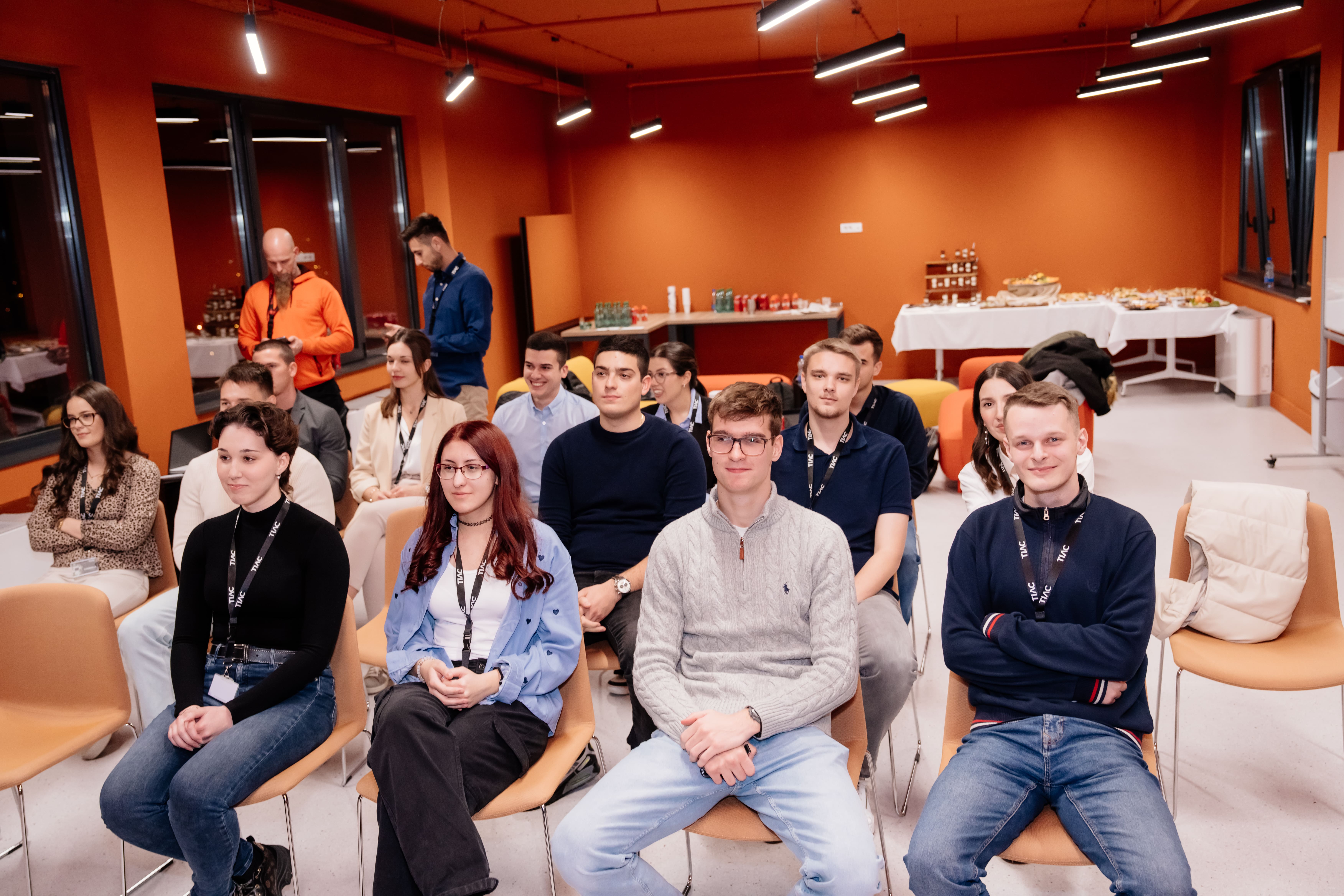
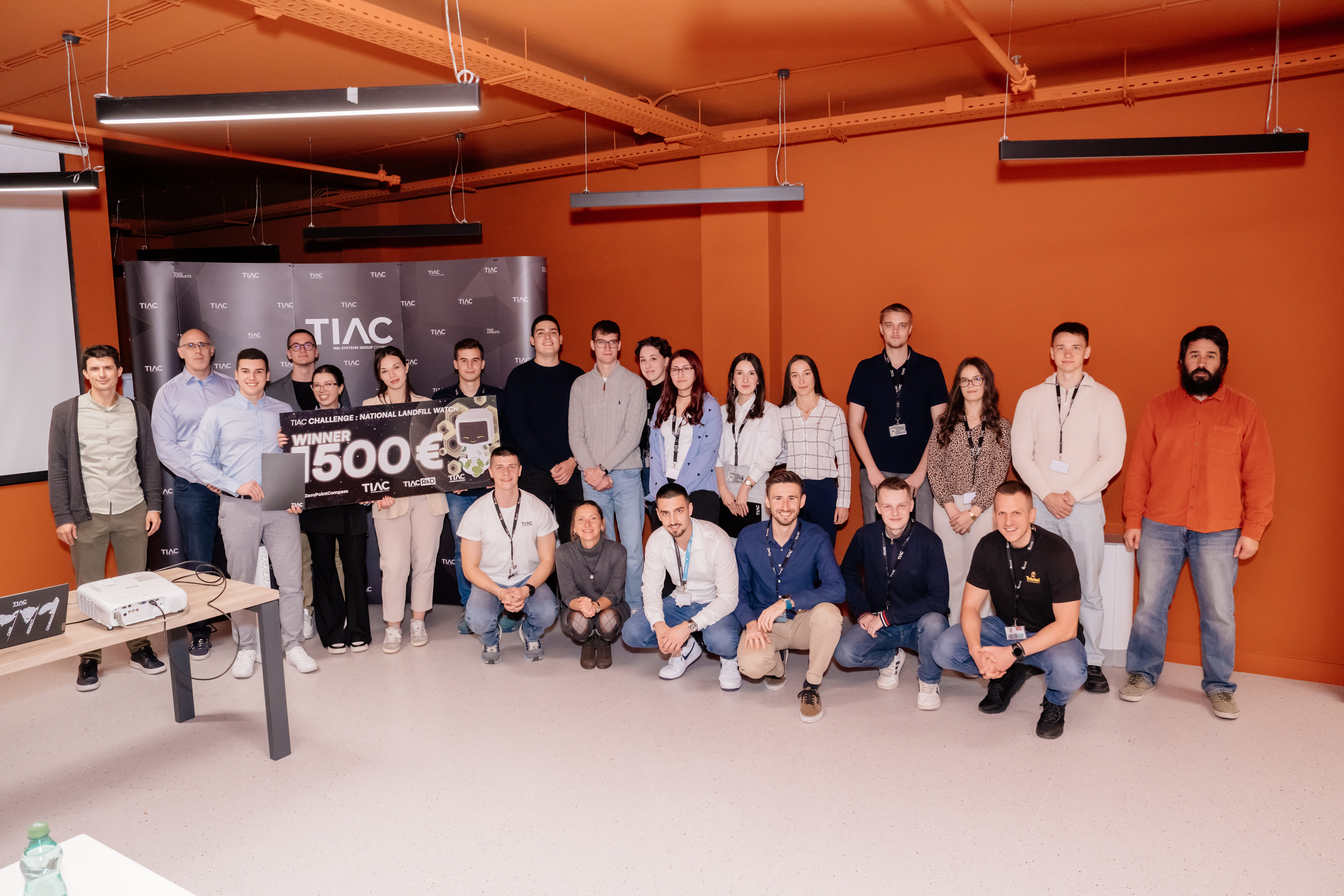
TIACChallenge 2025 attracted strong interest from students at the University ofNovi Sad. A total of 35 students applied, while 17 participants wereselected to go through the full program and formed four teams thatworked on developing their solutions.
Throughoutthe program, students received mentorship and lectures from the lecturers andexperts, who guided participants through key topics related to artificialintelligence and its practical application.
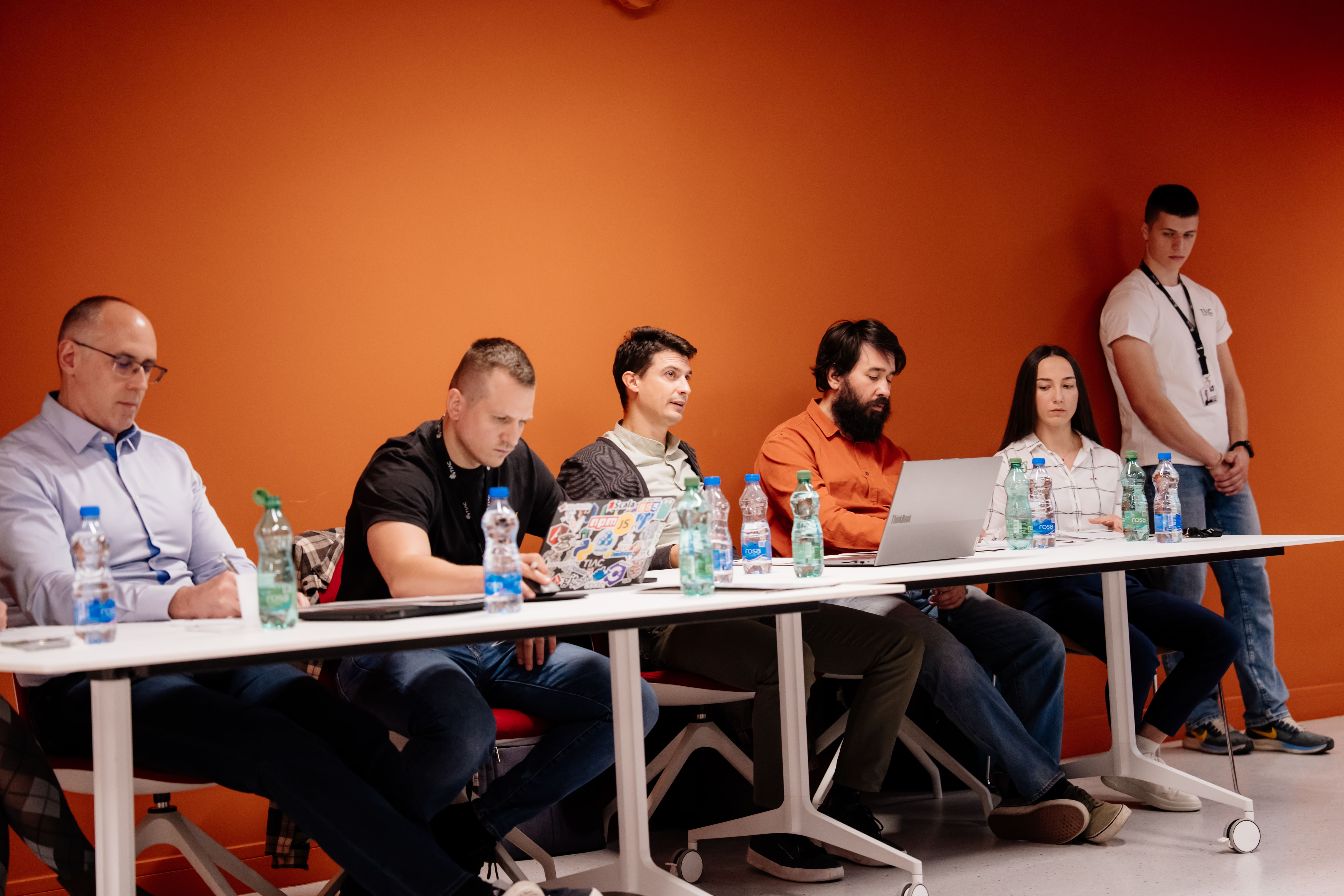
At theend of the six-week program, teams presented their solutions during a final pitchsession, demonstrating both the business and technical aspects of theirprojects. Each team was required to clearly explain the problem they addressed,the technology behind their solution, and the potential real-world impact.
Projects were evaluated by a six-member jury, including representativesfrom TIAC:Dr,Vladimir Mandić, ESG expert Anita Matt, and senior AIengineer Danijel Popović;together with three members of the Sokraft teamwho specialize in AI technologies: Mihaela Osmajić, Dr. Goran Savić, and Dr.Milan Segedinac.
The evaluation process was basedon predefined criteria that assessed two key dimensions of the projects:
- the business perspective, including relevance, applicability, and potential impact
- the technical implementation, focusing on the use of technology and the quality of the proposed solution
After the final presentationsand evaluation process, the jury selected the winning team of four students,whose project demonstrated the strongest balance between technologicalinnovation and a well-defined problem-solving approach. The team received a monetaryaward in recognition of their work and the quality of their solution.
Beyond the final result, thechallenge demonstrated how collaboration between academia and industry cancreate meaningful opportunities for students to experiment, build, and presenttechnology-driven solutions to real-world problems.
Data Engineering and Preparation Methodology for the Envizor ML System
Thedevelopment of the Envizor system relied heavily on high-quality input data,necessitating a rigorous process for collecting and processing satelliteimagery. Because public datasets were not fully adapted to the specificcharacteristics of the local terrain, we implemented a hybrid approach thatcombined Roboflow data with a custom-built image collection. The goal was notsimply quantity, but the creation of a representative sample that enables themodel to generalize effectively.
Theprocess consisted of several key engineering steps:
- Selection and Noise Reduction: The initial data pool underwent strict quality control. We removed low-resolution, blurry, and redundant images. A major emphasis was placed on incorporating "negative examples" locations without landfills to reduce false positives caused by terrain features that visually resemble waste in satellite photos.
- Dual-Layer Data Annotation: Data was prepared for two different model types. For the classification model, images were categorized into three groups: clear locations, unsanitary landfills, and illegal dumpsites. For the segmentation model, we utilized precise polygonal annotations to define exact boundaries, allowing the system to recognize both the presence and the total spatial footprint of the waste.
- Balancing and Validation: The dataset was partitioned into training, validation, and test sets. We maintained a strict class balance across all sets to prevent model bias toward more frequent examples, which is a prerequisite for a realistic performance assessment in real-world conditions.
- Iterative Engineering: The workflow was non-linear. By analyzing model errors during training, we identified critical gaps in the data. Based on this feedback, the dataset was continuously expanded with specific examples and refined, resulting in more stable performance and higher detection accuracy.
Thefinal, standardized dataset served as the foundation for training theclassification and segmentation models, which were ultimately integrated intothe Envizor web application to create a functional environmental protectiontool.
Encouraging Innovation Through Collaboration
One of the key values of the TIAC Challenge iscollaboration.
Students come from different academic backgrounds and bringdiverse perspectives. When these perspectives come together in a teamenvironment, they often produce ideas that are more creative and impactful thanany individual approach.
The challenge environment encourages participants to:
- experiment with new technologies
- question assumptions
- iterate on their ideas
- learn from both successes and failures
By the end of the program, teams present their projects to apanel of experts, demonstrating both the technical and conceptual aspects oftheir solutions.
Supporting the Next Generation of Innovators
For TIAC, the challenge is not only about the finalprojects. It is about creating an ecosystem where students can grow asengineers, innovators, and problem solvers.
Programs like this help bridge the gap between academia andindustry by allowing students to:
- work with modern technologies such as AI
- understand real-world sustainability challenges
- develop teamwork and presentation skills
- build projects that can become part of their professional portfolio
At the same time, TIAC gains the opportunity to connect withtalented young people who are motivated to use technology responsibly andcreatively.
Technology for a Better Future
The world is facing complex environmental and societalchallenges that cannot be solved by policy or technology alone. They require collaboration,innovation, and new perspectives.
By combining AI a strategic technology of the future with ESG-focused challenges, TIAC Challenge encourages students to thinkabout how technology can contribute to a more sustainable and responsiblefuture.
We believe that when talented students are given theopportunity to work on meaningful problems, their creativity can lead tosolutions that make a real difference.
And sometimes, those solutions start with a singlechallenge.